
WABO SPORTS · KARTING GUIDE
WABO Sports Karting Checklist: From Event Confirmation to the Driver Briefing
Prepare for a karting race day with WABO Sports: confirm entry details, organise your timetable and take clear questions into the organiser’s driver briefing.
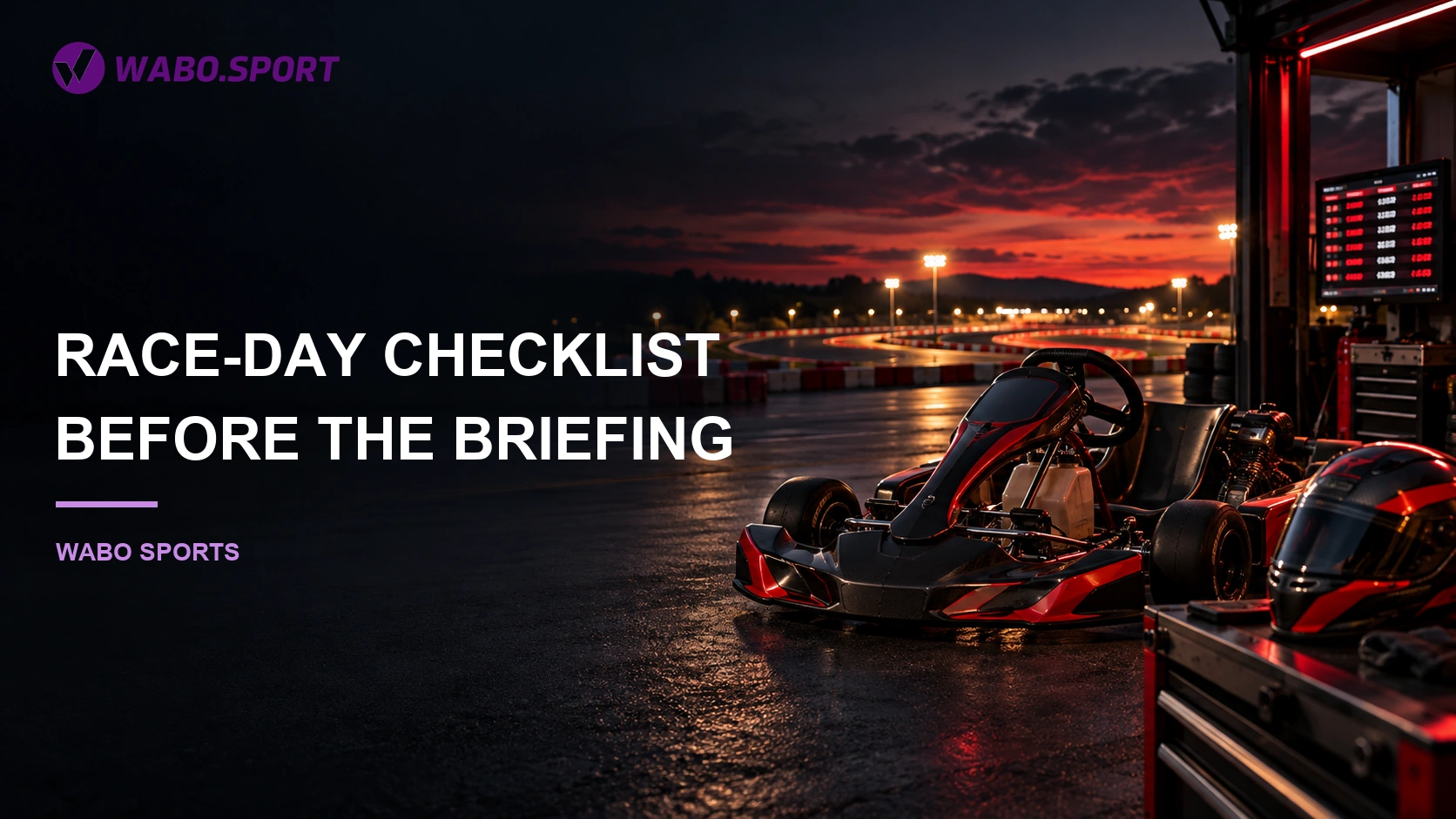
A karting race day begins before the first qualifying lap. Entry confirmation, arrival planning and the driver briefing all shape how smoothly a participant moves from the paddock to the track. A clear checklist helps keep those tasks in order without replacing the organiser’s instructions.
With the YMGC season finale approaching, WABO Sports readers can use this preparation guide alongside the published event announcement. It is an editorial checklist, not a second registration form, a new set of technical regulations or a claim that places are still available.
Keep one complete event reference
Save the event’s full name, date, venue, organiser link and latest announcement together. A poster image by itself can lose its caption, update date or registration instructions when it is forwarded. Retain the original page so you can check changes before travelling.
For the Yung Motorsport Go-Kart Championship 2026 final round, use the linked WABO Sports event guide and Yung Motorsport’s own channels. The published event material identifies WABO Sports, 707LIVE and Yung Motorsport as joint organisers. An editorial reminder should direct readers back to that material rather than inventing new conditions.
Separate an entry request from a confirmed place
Submitting information is not the same as receiving confirmation. Keep the acknowledgement or organiser message that identifies your entry, category and any next step. If the confirmation is unclear, ask through the organiser’s published contact route before treating the place as secured.
Avoid sharing a full entry form or payment image in a public group to ask a simple scheduling question. Prepare only the relevant reference and redact unnecessary personal information. This checklist does not collect registrations or handle entry fees; those remain with the event’s own process.
Plan the morning as several stages
Put arrival, registration, kart allocation and the briefing on separate lines in your timetable. “Racing starts at noon” is not a substitute for knowing when participants must check in. Use the organiser’s latest instructions for your actual reporting time.
Add travel margin appropriate to your route, but do not present a personal allowance as an official deadline. A useful plan leaves room to find the correct entrance and registration area without rushing. Confirm parking, access and companion arrangements where the announcement does not state them.
Ask about equipment before arriving
Check what the organiser supplies and what participants must bring. Do not infer helmet acceptance, clothing requirements, age eligibility or weight procedures from an old photograph. Requirements can depend on the meeting and class. The organiser’s written instructions are the right starting point.
Make a short question list while reading the announcement: what is provided, what must be checked, and where are unresolved equipment questions answered? If something essential is uncertain, resolve it before using the kart. This article deliberately does not substitute a generic equipment list for the event’s technical requirements.
Take specific questions into the driver briefing
Listen for the meeting’s own instructions on pit entry and exit, track signals, conduct, incidents and returning to the paddock. If a signal or procedure is unclear, ask before the session. Another circuit’s video can be helpful background but should not override the instructions at this meeting.
A strong question is short and practical: “Where do we wait after this session?” or “Which marshal point gives the instruction?” Asking about a procedure is more useful than pretending to understand a term you have only seen in a highlight clip. Keep the answer with your event notes.
Keep spectators and content capture in the plan
Friends and photographers also need the venue’s permitted access information. Do not enter a restricted area to recreate an angle from an old social post. Use the organiser’s viewing and media instructions, and check before placing equipment near a route used by participants or staff.
For a personal event record, capture the event identity, atmosphere and allowed viewing position first. Later captions should distinguish your own photograph, official material and an illustration. A striking image is stronger when its place in the event story is clear and its caption does not claim a result it cannot show.
Finish with a results and belongings check
After the session, confirm where results and any updates will be published. A timing-screen photograph may be provisional. Keep the category and session heading with a result rather than saving only a name and number. The related 707LIVE timing guide helps explain why individual lap times are not the same as the final classification.
Before leaving, check belongings and any organiser instructions about the rest of the programme. Use the WABO Sports archive to revisit earlier events, and return to the original announcement for current arrangements. A good checklist makes those sources easier to use; it does not replace the people running the meeting.
Sources and further context
Frequently asked questions
Does completing a form guarantee a place?
Do not assume so. Follow the organiser’s confirmation and entry instructions.
Can an earlier event’s equipment rules be reused?
Check the current meeting’s requirements rather than inferring them from older photographs.
Which track instructions should I follow?
Follow the current organiser and officials, including the driver briefing and any later updates.
Is a timing-screen photo always the final result?
No. Retain the category, session and provisional or final status, and check the latest classification.